After a tutorial with Dom today, our group has been given a lot more direction and we now have a very clear idea of the assembly of the whole film.
We will start by briefly introducing the main contributors at the start of the film along with other street performers and tie in the themes of the content of the contributions we got to form sequences around in the film. This is to give the film a better overall flow to it and not the individual start stop feel like we originally started heading for. This will make the film easier to watch from the audiences perspective, as well as making it more linear and easier to understand.
We have started to implement the changes immediately and we are currently starting to link what interviewees say in terms of themes, with one another so we can sort out what theme we introduce where.
Thursday, 28 February 2013

Tuesday, 26 February 2013
Editing Progress
We began editing as soon as we got back from Liverpool on the Wednesday afternoon by getting the raw footage of the tapes and SD cards and started sub-clipping them all to get them ready to be put in a sequence. I took the lead role in all of this as the main editor an organised them in relevance to their location first and then the shot type itself. Organisation is the key when it comes to editing as making everything tidy is always a massive time saver and time is something that is always against you when producing a film.
Me and the director Chris will be working very closely in this process as the goal is to put his idea and vision down into the timeline and create a solid documentary out of it. We have started compiling different shots and interviews together to form a sequence that we are happy with which tells the story we are trying to portray. We are only trying to form this rough assembly at the moment and after our tutorial with Dom, hopefully draw what we've created into a rough cut.
.png) After the first day of proper editing this is what we have come up with and what Dom will see tomorrow so we hope it is going in the right direction. To improve we should have tried to piece together a more realistic narrative to begin with, even though our idea didn't really have a set in stone direction and depended on what footage we got and the people we met.
After the first day of proper editing this is what we have come up with and what Dom will see tomorrow so we hope it is going in the right direction. To improve we should have tried to piece together a more realistic narrative to begin with, even though our idea didn't really have a set in stone direction and depended on what footage we got and the people we met.
Me and the director Chris will be working very closely in this process as the goal is to put his idea and vision down into the timeline and create a solid documentary out of it. We have started compiling different shots and interviews together to form a sequence that we are happy with which tells the story we are trying to portray. We are only trying to form this rough assembly at the moment and after our tutorial with Dom, hopefully draw what we've created into a rough cut.
.png)
Saturday, 23 February 2013
Shooting in Liverpool
Even with all the issues I mentioned in the previous post, our group still managed to get a variety of nice shots and a large range of content from 3 different interviews. This was due to our planning before we came and how we had arranged and contacted various potential leads before hand and all of this paid off regardless of the issues we faced, as we still managed to keep a decent schedule and get as much done as necessary to bulk out our film.
My main role in our group is sound designer/editor, however since there are only 4 of us and a lot needed to be done on location, I shared the role of sound recordist with others as well as helping on on finding decent compositions to film, and interacting with some performers we encountered.

 After a days shooting back at the hostel, I listened through the recordings a few times to check for any issues that could be tackled whilst still on location and which could be dealt with in post. Listening through them again also familiarised me with all the different sounds which is very helpful as I can feel comfortable knowing what we have and don't have, and what is said where and all in all just reducing any surprises that could come my way when starting to tamper and edit the sound in post-production.
Building on this, I also transcribed some of the interviews we obtained at the end of the day once again for the same reasons, and also so I could collaborate with the director so we could start pulling together a rough assembly sequence as soon as possible as a time saver for when we got back off location.


My main role in our group is sound designer/editor, however since there are only 4 of us and a lot needed to be done on location, I shared the role of sound recordist with others as well as helping on on finding decent compositions to film, and interacting with some performers we encountered.

Recording the sound on location is very beneficial to me as the sound designer as I already know what I'm working with before I get back into the edit suites, which means I can make decisions about re-recording sounds that may cause issues in the edit, or even recording a variety of 'random' sounds which can be edited in some way in post-production. Also, with more than one person recording the sound, it allowed a fresh pair of eyes and ears to gage if the sound being recorded was good quality, both in terms of technical quality and content, as well as bringing that individuals view in on what should/could be interesting to capture.

Building on this, I also transcribed some of the interviews we obtained at the end of the day once again for the same reasons, and also so I could collaborate with the director so we could start pulling together a rough assembly sequence as soon as possible as a time saver for when we got back off location.

Short hand transcription of Spanish band interview
Short hand transcription of Vanessa's interview
From these two transcriptions, I was able to collaborate
with the director and draw out a potential rough sequence that could be used in
the film which makes the editing process a lot less daunting as you don’t have
to start on a blank slate. It also allows us to not waste any time doing
nothing in Liverpool and not having to wait around until we get back to start
making our film.

On reflection, we should have made a shot list from all the
footage we obtained whilst in Liverpool and drawn those into the sequences we
began to plan to make them more substantial and entertaining for the audience
and this could have saved more time instead of leaving it till we got back
as well.
Thursday, 21 February 2013
Documentary Issues
Our group has experienced numerous issues surrounding the documentary. To start with we only had 4 members in our group meaning we all had to help one another with each role and work a lot harder in terms of carrying equipment, collaborating ideas and all in all getting the job done. This wasn't all bad however as it still allowed everyone's input to be shown in all areas so we had more minds working on one problem, having said that it also presented difficulties because if we all had different opinions on how to do something, it became very unclear and unfocused and basically 'too many chefs spoiled the broth' in certain areas and everything was a bit cluttered. We adapted well though with having less members as we all helped each other out and learnt from one another whilst never really running short on input.
Our second issue was with the Sony Z1 camera when we actually arrived in Liverpool which caused a whole world of problems. The camera worked fine for about 10 minutes worth of shooting until it kept saying it was out of battery and cut off even though the battery was apparently fully charged. We originally tried to charge the batteries again and again and try other groups but the problem kept occurring and then we realised it was the camera itself. Due to the camera cutting out when we were recording, the timecode on the tape became corrupt and meant we lost almost all of our first interview, and a number of our establishing shots as well as footage of performances which set us back quite a lot. To solve this problem we managed to get a DSLR camera of one of the other groups, which none of our team had ever used before. This meant we needed to buy SD cards and use pretty much all of the automatic settings on the camera we could which hindered some of the compositions we wanted to take originally. This also meant we had to record sound separately on the marantz as we didn't have an adapter for the XLR cable which could have created issues when syncing the video and sound in the edit. However, even with these issues we still managed to obtain decent footage and get enough content to make our documentary with due to our adaptation to the situation. We also told both Debbie and Dom as soon as these issues started to present themselves and kept them informed throughout the entire time we were on location and asked for their guidance.
All in all I think we adapted as well as we could with the issues we faced and should be able to make a solid documentary with the footage we obtained.
Our second issue was with the Sony Z1 camera when we actually arrived in Liverpool which caused a whole world of problems. The camera worked fine for about 10 minutes worth of shooting until it kept saying it was out of battery and cut off even though the battery was apparently fully charged. We originally tried to charge the batteries again and again and try other groups but the problem kept occurring and then we realised it was the camera itself. Due to the camera cutting out when we were recording, the timecode on the tape became corrupt and meant we lost almost all of our first interview, and a number of our establishing shots as well as footage of performances which set us back quite a lot. To solve this problem we managed to get a DSLR camera of one of the other groups, which none of our team had ever used before. This meant we needed to buy SD cards and use pretty much all of the automatic settings on the camera we could which hindered some of the compositions we wanted to take originally. This also meant we had to record sound separately on the marantz as we didn't have an adapter for the XLR cable which could have created issues when syncing the video and sound in the edit. However, even with these issues we still managed to obtain decent footage and get enough content to make our documentary with due to our adaptation to the situation. We also told both Debbie and Dom as soon as these issues started to present themselves and kept them informed throughout the entire time we were on location and asked for their guidance.
All in all I think we adapted as well as we could with the issues we faced and should be able to make a solid documentary with the footage we obtained.
Saturday, 16 February 2013
Liverpool Documentary Information
As we are heading off to Liverpool to film our documentary next week, our group has been frequently meeting up and discussing shot lists, schedules, interview questions, equipment lists and transport all in preparation for when we arrive so we can have a good idea what we're all doing and get started with it instantly.

Our documentary will be 5 minutes long and tell the stories of street performers that live and play in Liverpool. In this documentary you will be given an insight into what these performers lives are actually like, and how they are as people. This will be done through a series of interviews with them on the streets and will be accompanied by their performances which we will cut away to throughout the film. Depending on the content given to us by the performers in the interviews, we may decide to focus in on one of them and their story whilst still cutting between other individuals and their opinions to give a decent contrast between street performers lives. In the interviews we will try to obtain why the individuals do what they do, how they came about doing it and whether or not it is a hobby or career to them, and also ask them all if they have heard about a law that was almost passed that would prevent a lot of street performers doing what they do, and potentially focus the documentary on this question.
The purpose of this documentary is to observe and investigate the lives of street performers in general, with a focus on Liverpool and how the city is a hub for buskers and performers alike and how the city has effected their lives.
Equipment list and Schedule


(Some of our initial ideas [sorry for the lack of a scanner])
The TreatmentOur documentary will be 5 minutes long and tell the stories of street performers that live and play in Liverpool. In this documentary you will be given an insight into what these performers lives are actually like, and how they are as people. This will be done through a series of interviews with them on the streets and will be accompanied by their performances which we will cut away to throughout the film. Depending on the content given to us by the performers in the interviews, we may decide to focus in on one of them and their story whilst still cutting between other individuals and their opinions to give a decent contrast between street performers lives. In the interviews we will try to obtain why the individuals do what they do, how they came about doing it and whether or not it is a hobby or career to them, and also ask them all if they have heard about a law that was almost passed that would prevent a lot of street performers doing what they do, and potentially focus the documentary on this question.
The purpose of this documentary is to observe and investigate the lives of street performers in general, with a focus on Liverpool and how the city is a hub for buskers and performers alike and how the city has effected their lives.
Equipment list and Schedule


Above shows our equipment list, as well as our initial schedule for the trip which we will try and stick to as much as possible to ensure that our time is not wasted whilst we are there.
We also agreed that on the final day we would use the time to potentially re-shoot anything we needed depending on our findings in a review session planned for the end of the Tuesday evening where we will watch through the footage we have already obtained and decide what other shots we need and how to go about shooting them.
Wednesday, 13 February 2013
Dark Days Analysis
Dark Days is a documentary by Marc Singer about homeless people living in an abandoned section of the underground railway in New York called the 'Freedom Tunnel' and documents their daily lives as they struggle to make a living, a home and a life with not what they are given, but with what they can achieve themselves. I quite enjoyed the documentary on a number of levels, firstly the content was very good and actually had an underlying narrative, something which a lot of documentaries do not contain, which was that the 'homeless' inhabitants of the tunnels were being evicted out and moved into houses.
The documentary starts with a montage of establishing shots of New York and slowly moves into the underground. I think that this is a very effective technique to set the scene and location for the documentary and makes it very clear to the audience as to what the rest of the film will be about. I will adopt this technique when shooting and editing our own documentary by establishing the location first (Liverpool) and then moving on the focus of the film, the street performers and introduce them slowly with a compilation of different shots.
 Another thing I liked about this documentary was the font used for the text overlays through the film and this was because it really fit with the style and themes presented in the film and actually made the overlays smoother and more accepted by the audience. This is something I will carefully consider when using text overlays in our documentary as if they are just a standard font, then they don't link in with the films themes and just seem out of place, tacky and just don't really add much to it.
The use of a variety of shots and compositions through Dark Days also makes it very entertaining to watch and it never feels as though you visit the same place, even though the majority of the documentary is filmed in a very small, cramped location. The use of tracking shots, close ups and long shots, mostly all tripod based, gives the documentary a professional feel and contrasts slightly with the grimy theme of the film and makes it seem neater. Standard interview camera shots were also used (BBC close ups) along with cut aways, L and J cuts to give the film a more rounded use of compositions.
Finally the interviewer is never heard, or shown which gives a very voyeuristic theme to the film but also makes it feel more professional as it is keeps to the conventions of a standard documentary. I think we will attempt to do this in our film as well, and try to keep voice overs to a minimum to make the film seem tight and professional.
The documentary starts with a montage of establishing shots of New York and slowly moves into the underground. I think that this is a very effective technique to set the scene and location for the documentary and makes it very clear to the audience as to what the rest of the film will be about. I will adopt this technique when shooting and editing our own documentary by establishing the location first (Liverpool) and then moving on the focus of the film, the street performers and introduce them slowly with a compilation of different shots.

The use of a variety of shots and compositions through Dark Days also makes it very entertaining to watch and it never feels as though you visit the same place, even though the majority of the documentary is filmed in a very small, cramped location. The use of tracking shots, close ups and long shots, mostly all tripod based, gives the documentary a professional feel and contrasts slightly with the grimy theme of the film and makes it seem neater. Standard interview camera shots were also used (BBC close ups) along with cut aways, L and J cuts to give the film a more rounded use of compositions.
Finally the interviewer is never heard, or shown which gives a very voyeuristic theme to the film but also makes it feel more professional as it is keeps to the conventions of a standard documentary. I think we will attempt to do this in our film as well, and try to keep voice overs to a minimum to make the film seem tight and professional.
Thursday, 7 February 2013
Our Pitch
After meeting with one another and collaborating ideas all week, our group has decided on a final documentary idea lead by director Chris Kenward; The lives and stories of street performers/buskers in Liverpool.
Chris will be taking the director role, George Hundu will be taking the producer role, Edgar Kyebanakolanga will be the camera operator and I will be the editor. As our group has 2 to few people in it, we will all be helping one another with their respective roles as much as we can over the individual in charges' leadership. I will be leading the sound design role with Chris and George and Edgar will be leading the sound recordist role.
Here is a preview of the presentation we will be giving for our pitch later today.


Chris will be taking the director role, George Hundu will be taking the producer role, Edgar Kyebanakolanga will be the camera operator and I will be the editor. As our group has 2 to few people in it, we will all be helping one another with their respective roles as much as we can over the individual in charges' leadership. I will be leading the sound design role with Chris and George and Edgar will be leading the sound recordist role.
Here is a preview of the presentation we will be giving for our pitch later today.


Tuesday, 5 February 2013
Liverpool Research and Pitch Ideas
In preparation for the pitching of our ideas on Thursday, I have been using the tourist information website www.visitliverpool.com and wikipedia for my main research as I have never visited there before. Something that has immediately caught my attention is the Liverpool waterfront not only aesthetically but also historically. My initial ideas involved filming various buildings on the waterside and possibly giving a voice over with the background information of them in the overall film. However with the freedom that the brief gives I would like to expand on this idea and other more common ideas like it to give a very special, original piece of film. How my group and I will do this is still being constructed and thought through and when we deliver our pitches on Thursday we will hopefully get some good feedback as to what we need to address to improve.


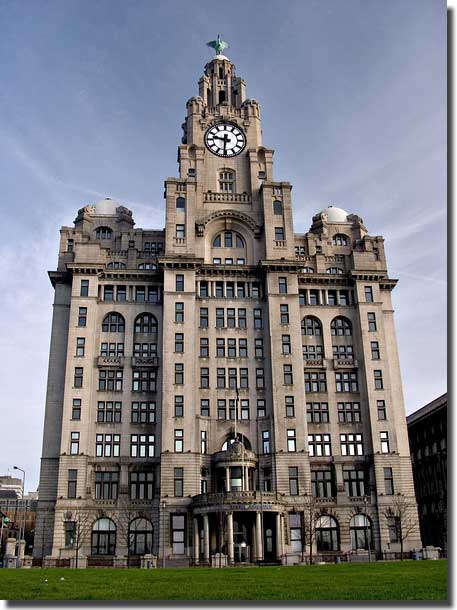

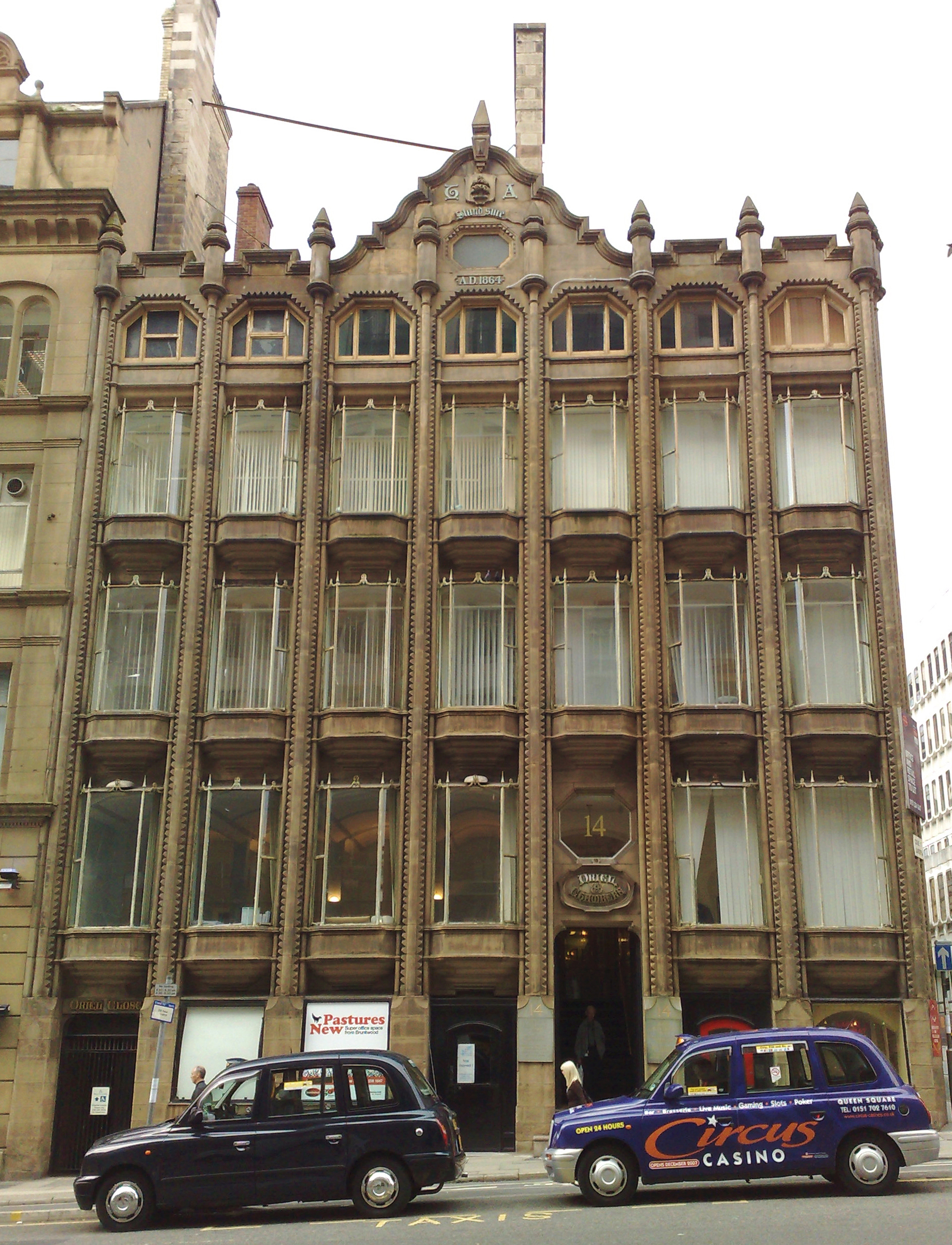
Above are some examples of buildings located on the Waterfront that I have a particular interest in along with many others.
The reason I have picked these buildings is because they have not only been recognised as aesthetically pleasing, but also that they have a good history and therefore a good story to tell. This could go somewhere as we are only in the brainstorming stage as a team and we could even elaborate on this and do 'interviews' with the buildings themselves as a kind of mockumentary much like that of Borat (2006) but as I've said, these are just the ideas of quick brainstorms.
After the pitching session on Thursday, our group will come together and discuss our ideas in further details and hopefully we will come to a firm idea quickly so we can start to come up with a storyboard, script, shot list and actually plan the trip.
Sunday, 3 February 2013
Documentary Research
In this weeks seminar, we watched numerous short documentaries on a wide range of topics. We discussed the realism of what we were watching and how the viewer can be manipulated through the editing of certain shots and other post production techniques (soundtrack, subtitles and voice over). This got me thinking about documentaries I had previously watched and which ones attempted to give the most real image possible of the content being shown.
I selected a series of small documentaries commissioned by a magazine company VICE who also produce various documentaries and upload them to YouTube with the help of freelance film makers. This specific series is called 'Ground Zero: Syria' and shows what is described as"Ground Zero Syria is a series where we've compiled photojournalist and videographer Robert King's footage into a series of raw, largely unedited vignettes that present a snapshot of the ancient city as it crumbles and burns while its citizens are killed indiscriminately."
It is a 6 part series and shows absolutely appalling and disturbing images of what is happening on the streets of Syria and due to the 'largely unedited' footage in the documentary, it should be a very real representation of what is actually happening. However there are still a few manipulative traits as only one perspective is given which means as the audience you have only one party to side with, however, contextually this is very logical.
I selected a series of small documentaries commissioned by a magazine company VICE who also produce various documentaries and upload them to YouTube with the help of freelance film makers. This specific series is called 'Ground Zero: Syria' and shows what is described as"Ground Zero Syria is a series where we've compiled photojournalist and videographer Robert King's footage into a series of raw, largely unedited vignettes that present a snapshot of the ancient city as it crumbles and burns while its citizens are killed indiscriminately."
It is a 6 part series and shows absolutely appalling and disturbing images of what is happening on the streets of Syria and due to the 'largely unedited' footage in the documentary, it should be a very real representation of what is actually happening. However there are still a few manipulative traits as only one perspective is given which means as the audience you have only one party to side with, however, contextually this is very logical.
WARNING: VERY GRAPHIC IMAGES
This is the first part of the series and shows Dr. Qasim in a hospital treating patients that are being brought in all the time.The main themes shown throughout this film are that of injury, pain, suffering, death, helplessness e.c.t and they are all very clear through the subject matter. It contains interviews with him both pre organised and shot with the action going on which gives good variety and there is a massive range of shots, most are hand held and un-composed (set up) and just film the subject matter as it is happening. This is very effective in giving a real perspective on the action and it also is made more shocking as the shaky hand held shots give an uncomfortable point of view to the audience.
I think this documentary is very powerful and shocking in a good way as it gives a realistic and an un-tampered view on the subject matter. However it does lack the documentary convention of a back story/background information and a detailed explanation of what the documentary is specifically about, but this is due to the short length of the film and that the images can just speak for themselves due to the raw and brutal nature of the shots.
Subscribe to:
Comments (Atom)